
Medicinal Plants for Children
By Dr. Julie Sweeney, Integrative Pediatrician at SproutWell
How I Use Botanical Medicine in Integrative Pediatrics
One of the most common questions I hear from parents is, “What else can we do?”
What I love about integrative pediatrics is that it gives us a broader toolkit for answering that question. Modern pediatrics has extraordinary treatments to offer, but medication is not the only option. Nutrition, mind-body medicine, acutherapy, targeted nutrients, and medicinal plants can all support a child’s health.
Plants have been used therapeutically for thousands of years, and many contain active compounds that can influence the nervous system, inflammation, digestion, and immune function. At SproutWell, I use them selectively as part of individualized plans. Sometimes they complement conventional medication, sometimes they are one of several nonpharmacologic approaches we try first, and sometimes the best plan doesn’t include them at all.
The point of integrative medicine is not to choose between “natural” and conventional care. It is to understand more options and choose thoughtfully among them.
Why I Studied Medicinal Plants
I was first introduced to medicinal plants during my fellowship training in integrative medicine. That training came at just the right time: while I was a fellow, I was diagnosed with Crohn’s disease. I began using an anti-inflammatory diet and botanicals such as curcumin as part of a broader approach. Experiencing how these tools fit into my own path to remission made me want to understand the science of botanical medicine more deeply.
I went on to complete the Medicinal Plants Certificate at Cornell University, where I studied the biochemistry and pharmacology of medicinal plants, their traditional uses, and their potential applications across body systems. That training now helps me decide which botanical therapies may be useful for children, and how to use them safely and thoughtfully.
Some of the Plant-Based Therapies I Use at SproutWell
There is no standard herbal protocol in my practice. I choose therapies based on the child, the symptoms we are addressing, the evidence available, and what else is already part of the treatment plan.
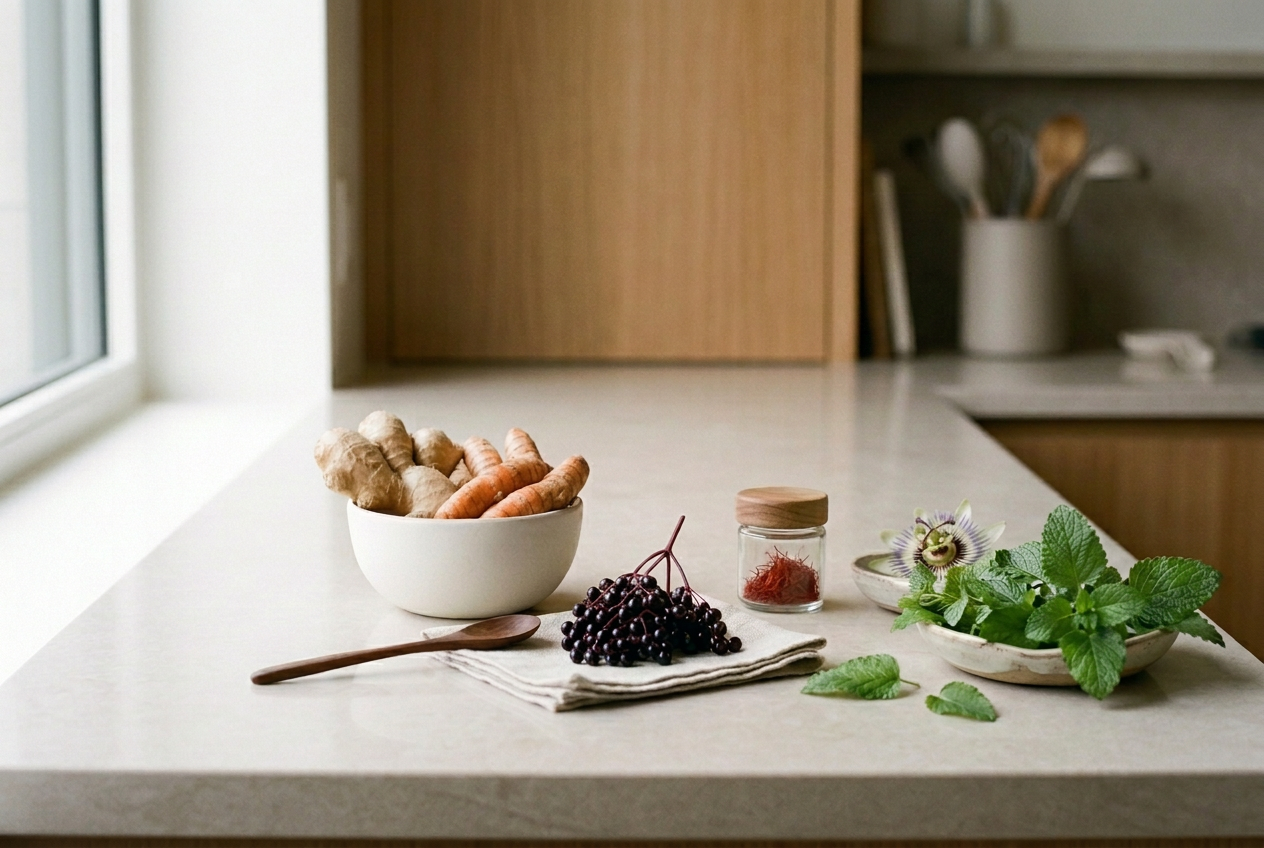
These are several of the botanicals and plant-derived compounds I use most often.
Lemon Balm
Lemon balm (Melissa officinalis) is one of the plants I use most frequently for children who have difficulty winding down, mild anxiety, or trouble settling into sleep.
It belongs to the mint family and has a long history of use as a calming botanical.
Lemon balm can be one gentle tool within an evening routine that might also include consistent sleep timing, light exposure, relaxation practices, and attention to underlying anxiety.
Saffron
Saffron (Crocus sativus) is probably one of the more surprising botanicals I use.
Most parents know saffron as a spice, but its active compounds have also been studied for their potential effects on mood and attention.
There is emerging pediatric research in ADHD, including a small randomized double-blind trial comparing a standardized saffron preparation with methylphenidate. The findings are promising, but the evidence base is still early.
I would not describe saffron as a substitute for stimulant medication, but I do think it is a fascinating example of how integrative medicine can expand the conversation.
Passionflower
Passionflower (Passiflora incarnata) is another botanical I use when anxiety and difficulty settling down occur together.
It is less familiar to many parents, but it has a long history of traditional use for anxiety and sleep and continues to be studied for its calming effects.
Ginger
Ginger (Zingiber officinale) is one of my favorite medicinal plants because it shows how closely nutrition and botanical medicine can overlap.
I use ginger primarily for nausea and digestive discomfort and as part of an anti-inflammatory dietary pattern.
It can be consumed as a food, tea, or more concentrated preparation depending on the goal.
This is a recurring theme in integrative medicine: the therapeutic effect does not always require adding another pill. Sometimes food itself can be part of the treatment.
Turmeric and Curcumin
Turmeric (Curcuma longa) is one of the best-known medicinal plants studied for its anti-inflammatory properties.
Turmeric is the root commonly used in cooking. Curcuminoids are a group of active compounds found in turmeric, with curcumin being the best known and most studied.
I use turmeric both nutritionally and, in selected patients, in more concentrated supplement forms.
This is another area where integrative medicine becomes very practical. I may talk with one family about adding turmeric to soups, curries, rice, or roasted vegetables, while another child with a specific clinical indication may use a standardized curcumin formulation.
Both approaches come from the same plant but serve different purposes.
Elderberry
Elderberry (Sambucus nigra) is one of the botanicals I use most often in the setting of respiratory illness.
It has a long history of use in traditional medicine and has been studied for whether it may reduce the duration or severity of some respiratory symptoms. The research is still limited, but it is an interesting example of a botanical that may have a role in supportive care. It may sit alongside hydration, sleep, appropriate fever and pain management, nutrition, and conventional medical treatment when needed.
Choosing the Right Botanical Matters
One of the most important lessons in botanical medicine is that the name of the plant is only the beginning.
The preparation matters.
The amount matters.
The part of the plant matters.
And the other ingredients in the product matter.
Many supplements marketed for “calm,” “focus,” “sleep,” or “immunity” contain long combinations of botanicals, vitamins, amino acids, and other compounds. Sometimes those combinations are appropriate, but often I would rather know exactly what we are using and why.
For children, I also pay close attention to age-appropriate dosing, medication interactions, product quality, and independent third-party testing.
Integrative Pediatrics Is About Having More Tools
Integrative pediatrics is about practicing good pediatrics with a larger toolbox.
My goal is not to give children as many supplements as possible. It is to understand the child as a whole, identify the factors we can meaningfully change, and choose the few therapies most likely to help.
Medicinal plants are one of the tools in my toolbox and one of the reasons I find integrative pediatrics so exciting!
Julie Sweeney, MD, is a double board-certified pediatrician and integrative medicine physician and the founder of SproutWell Pediatric Integrative Medicine in Darien, Connecticut. She helps families take a broader, evidence-based approach to children’s health by combining conventional pediatrics with nutrition, lifestyle medicine, mind-body strategies, and thoughtfully selected complementary therapies.
Selected References
Baziar, Sara et al. Crocus sativus L. Versus Methylphenidate in Treatment of Children with Attention-Deficit/Hyperactivity Disorder: A Randomized, Double-Blind Pilot Study. J Child Adolesc Psychopharmacol. 2019;29(3):205-212. doi:10.1089/cap.2018.0146.
Seyedi-Sahebari, Sepideh et al. The Effects of Crocus sativus (Saffron) on ADHD: A Systematic Review. J Atten Disord. 2024;28(1). doi:10.1177/10870547231203176.
Wieland, L Susan et al. Elderberry for prevention and treatment of viral respiratory illnesses: a systematic review. BMC Complement Med Ther. 2021;21:112. doi:10.1186/s12906-021-03283-5.